
Some of the key names include: Maruti, M&M, Ashok Leyland, Britannia, Ultratech, JK Cement, Havells, Voltas, Amber, Metro, Trent, LemonTree, Indian Hotels, Niva Bupa, HDFC Life, IGL, Acme Solar, Suzlon, Swiggy, Delhivery, ICICI Bank, HDFC Bank, Bajaj Finance, Shriram Finance," according to a report by Motilal Oswal Financial Services.

The proposed reforms in goods and services tax (GST) announced by the government last week, coupled with the eighth pay commission dole-out, is likely to push consumption-driven stocks - such as air conditioners (ACs), select automobiles, fast-moving consumer goods (FMCG), retail, and counters of quick-service restaurants (QSRs) - into higher orbit over the next few months, believe analysts.

New lower GST rates kicked in from Monday, resulting in a slashing of prices of as many as 375 items ranging from toothpaste and shampoo to cars and television sets, a move seen as an attempt to boost consumption to cushion an economy facing tariff headwinds. Tax rates of 5, 12, 18, and 28 per cent have been clubbed into two rates of 5 per cent and 18 per cent, resulting in a reduced price of 99 per cent of daily use items.

Among the Sensex firms, Mahindra & Mahindra jumped the most by 5.96 per cent. Bajaj Finance, Bajaj Finserv, Trent, ITC and HDFC Bank were also among the gainers. However, Maruti Suzuki India, Bharat Electronics, HCL Tech, NTPC, Power Grid, Infosys and Reliance Industries were among the laggards.

As lower GST rates take effect on Monday, sales of air-conditioners, TV sets surged dramatically with buyers rushing to grab cheaper deals offered by retailers at the beginning of the Navratra festival.

Reliance Industries (RIL) annual general meeting (AGM) had several stunning announcements. RIL looks to list Jio Platforms (JPL) by June 2026. It targets doubling of FY22 earnings before interest, taxes, depreciation and amortisation (Ebitda) (Rs 1.25 trillion; $14.6 billion) by FY27 implying 14.7 per cent compound annual growth rate (CAGR) over the FY22 levels.

To shield against US President Donald Trump's tariff shock, analysts have been advising investors to focus on stocks of domestic-oriented companies, rather than export-centric ones, to minimise potential losses.

Leading FMCG maker HUL said that it has received a demand notice of Rs 962.75 crore from the Income Tax Department and will go in for an appeal against the order. The notice relates to non-deduction of TDS on payment of Rs 3,045 crore to GlaxoSmithKline Consumer Healthcare (GSKCH) for the acquisition of Intellectual Property Rights of the Health Foods Drinks (HFD) business consisting of brands as Horlicks, Boost, Maltova, and Viva, according to a recent exchange filing.

Colgate-Palmolive India's September quarter (Q2FY26) performance has reinforced concerns among brokerages about the company's continued market challenges.

'Defence, capital goods, engineering, capital market-related stocks, autos, and cement sectors are my bullish bets for Samvat 2082.'

Advertisers will pay 18 lakh to 25 lakh per 10 seconds, a 10% to 20% increase over the last Asia Cup final.

Equity benchmark indices Sensex and Nifty ended lower on Thursday after US President Donald Trump announced the imposition of a 25 per cent tariff on all goods coming from India starting August 1 and an unspecified penalty for buying Russian crude oil and military equipment.

The slowdown in private consumption in the economy is taking a toll on the growth of fast-moving consumer goods (FMCG). The net sales growth of listed FMCG companies hit a 14-quarter low of 2.5 per cent in October-December 2023 (Q3FY24). This is the lowest revenue growth for the industry since the June 2020 quarter, when the FMCG firms in the Business Standard sample had reported a 13.2 per cent Y-o-Y decline in combined net sales owing to the lockdown.

Despite recent underperformance, MNC funds have delivered over longer time frames.

HUL managing director Rohit Jawa's total remuneration in FY25 has witnessed an increase of 3.75 per cent to Rs 23.23 crore, according to the latest annual report of the FMCG major. Jawa's annual package included a salary of Rs 3.65 crore, allowances of Rs 11.45 crore, a bonus of Rs 3.78 crore and a perquisite long-term incentives of Rs 2.76 crore.

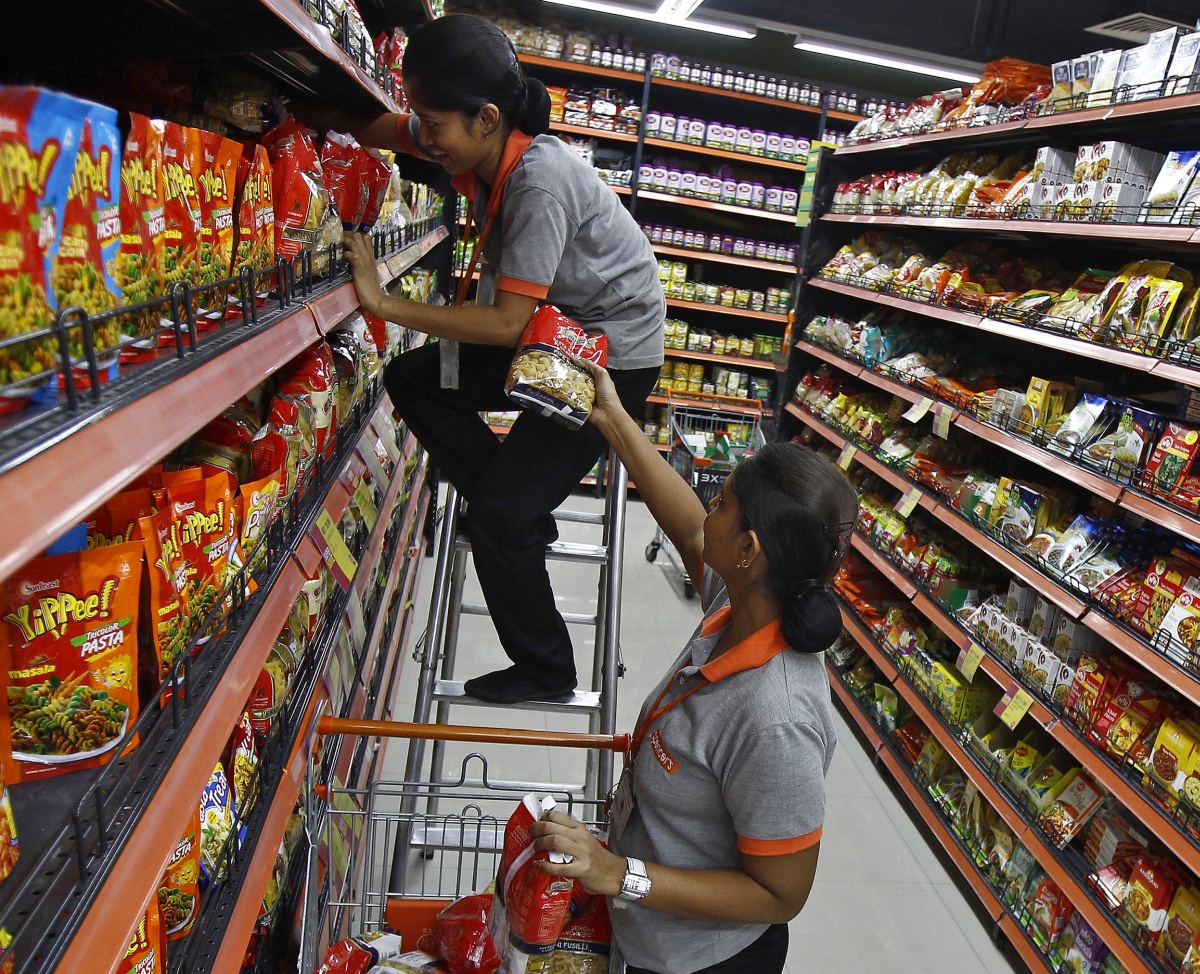
A young couple sharing a laugh - in the living room over a Polish joke book, on the beach, in the rain - with the tagline, "Made for each other", hung from billboards at prominent street corners from the 1960s to the 1990s. It was a campaign for one of the largest selling cigarette brands in India, Wills (Navy Cut) from the ITC stable, that resonated with a generation of smokers and non-smokers alike till the curtains came down on tobacco advertising in 2004. As we prepare to welcome 2024, ITC has metamorphosed from a tobacco giant into a conglomerate straddling multiple large-sized businesses. In the mind space of Gen Z or millennials, the company represents a gamut of branded products - from frozen food (ITC Master Chef), noodles (YiPPee!), and cookies (Sunfeast) to snacks (Bingo!) and notebooks (Classmate), and so on and so forth.

Over the past year, the National Stock Exchange Nifty FMCG Index, which tracks the market capitalisation of the top 15 companies in the fast-moving consumer goods (FMCG) sector, has surged by 17.3 per cent. In contrast, the Nifty50, a broader market index, has witnessed an 8.8 per cent increase during the same period. The FMCG stocks have also been rally leaders in the current calendar year.

Market reaction to the Union Budget was overall neutral. The income tax "gift" wasn't enough to move the needle. There was some apparent rationalisation of Customs duty structure as well as cuts on import duties of some key components for the telecom and IT industry and duty cuts on vehicle imports. Other proposals related to development of agriculture and rural economy and renewables seem to be generally positive.
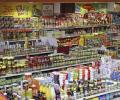
Fast moving consumer goods (FMCG) companies are expected to see muted topline growth, with uneven spread of the monsoon impacting demand. Rural demand recovery, too, remains elusive in the July-September quarter. Brokerages expect volumes to remain steady in the quarter on a sequential basis.

The FMCG sector is generally considered to be a safe haven during difficult times as people never stop buying soap and toothpaste. However, weak rural and semi-urban demand has been a factor since the lockdowns of 2020-21 while rising inflation has also impacted margins. While the FMCG majors have survived on the basis of price hikes and good management practices, they have seen growth slowdowns and experienced margins being squeezed as raw materials and transport costs rose. The FMCG sector witnessed positive volume growth in the fourth quarter of the 2022-23 financial year (Q4FY23) after five consecutive quarters of decline, and the rebound in demand was led by urban markets.
There remains a debate on who said this: "When the facts change, I change my mind. What do you do, Sir?" Was it the British economist John Maynard Keynes or the American economist Paul Samuelson. Irrespective of who said it, this sentiment appears to have found resonance in ITC's boardroom in recent years.
It may be a little early to cheer the recovery in the fast-moving consumer goods (FMCG) space as a deceleration in discretionary demand, after the festival season, may offset fragile rural recovery, analysts have cautioned. "The overall demand environment for staples remains muted, while discretionary demand trends have seen some deceleration after the festival season. "We believe margins in staples have bottomed out, but we expect only a gradual uptick with the ongoing softening in raw material prices.

Marico reported consolidated revenue growth of 20 per cent year-on-year (Y-o-Y) during the January-March quarter (Q4) of FY25. Domestic revenue surged 23 per cent Y-o-Y, while volume growth was 7 per cent. International growth stood at 11 per cent (16 per cent in constant currency growth).

From the 30-share blue-chip pack, Zomato surged over 7 per cent. Maruti, ITC Hotels, ITC, Mahindra & Mahindra, Asian Paints, Titan and IndusInd Bank were among the biggest gainers. Power Grid, Larsen & Toubro, NTPC, UltraTech Cement, HCL Tech, Tech Mahindra, Infosys and Adani Ports were among the laggards.

Ask rediffGURU and PF expert Nitin Narkhede your mutual fund and personal finance-related questions.

FMCG major Hindustan Unilever Ltd on Wednesday reported a 19.18 per cent rise in consolidated net profit at Rs 2,989 crore in the December quarter.

Domestic rating agency ICRA on Monday said Indian companies are likely to clock 7-8 per cent revenue growth during the March quarter of the current fiscal year, led by revival in rural demand and uptick in government spending. ICRA expects the private capital expenditure (capex) cycle to remain measured in view of the uncertainties around geopolitical developments and relatively subdued outlook on merchandise exports from India.

'There's a misconception that all Rs 1 lakh crore will be spent immediately, leading to higher consumption of FMCG goods, travel, and vehicle purchases.' 'While some of this money will go toward consumption, not all of it will.' 'The impact depends on where people deploy their savings.'

Dabur's pre-quarterly update for Q3FY25 disappointed the market with the share dropping by 3.9 per cent. Growth was slower than expected and inflation hit margins. The management said that the fast-moving consumer goods (FMCG) consumption in rural markets was resilient and continued to grow faster than in urban markets.

Overall market reaction to the Budget was neutral. Investors absorbed the changes to the tax rates (positive for salaried class) and capital gains taxes (CGTs, negative due to the removal of indexation and increases. Other proposals largely pertain to supporting rural development, buybacks taxed as dividends, Custom duty changes that impact multiple sectors, higher outlays for clean energy, etc. There's some moderation in the growth of capex outlay across defence, fer

Brokerages expect a further slowdown in Indian firms' revenue and earnings growth in Q4FY25, following low single-digit growth in the preceding three quarters, as factors like weak consumer demand and credit growth linger on.
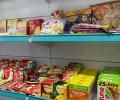
'In staples, we have still managed in rural areas.'

In spite of a severe second wave of the coronavirus pandemic, and a widespread disruption in public life therefore, India's fast-moving consumer goods (FMGC) sector seems to have emerged as one of the most resilient segments of the economy. The early numbers and estimates for the April-June quarter indicate a steady recovery in FMCG players' business, which is now set to exceed the pre-pandemic level. Amid nationwide lockdowns because of the first Covid wave, FMCG revenues had been severely affected in mid-2020.
The 70 launches were made in the first half of the financial year alone and were mostly focused on hygiene, health & wellness, naturals and convenience, which were in high demand as Covid -19 raged across the world.

Stocks of alcoholic beverage makers have corrected over the last few trading sessions on worries that taxes, competition and costs will hurt sales and profitability. The recent trigger for the decline is Karnataka, which accounts for 15 per cent of overall liquor consumption, increasing duties. The state increased by 20 per cent the additional excise duty on Indian-made foreign liquor (IMFL) on all slabs.

Corporate India's struggle with subdued revenue and earnings growth persisted in the October-December quarter of 2024-25 (Q3FY25). The combined net sales (gross interest earnings for lenders) of listed companies grew in single digits for the seventh consecutive quarter, while their combined net profit rose by a single digit for the third straight quarter.
Most of the changes have come about in the last four years and ITC is now reaping the dividends - standalone revenues from the non-cigarettes FMCG business have grown 40 per cent from FY17 to Rs 14,728.21 crore in FY21 and pre-tax profits 30 times to Rs 823.69 crore. The business accounted for 30.58 per cent of gross revenues and 4.85 per cent of pre-tax profits in FY21. "In the last four years, our margins in FMCG have gone up by 640 basis points (bps) and EBITDA margins have been moving up consistently. "We created levers that enabled a sustained growth trajectory," said ITC chairman and managing director Sanjiv Puri. Puri took charge as the chief executive officer in 2017; in 2018, he was redesignated managing director and effective May 2019, he became chairman.
However, rural demand continued to remain a concern for FMCG companies during the quarter.

Patanjali Foods has been served a show cause notice by the GST intelligence department, asking the company to explain why input tax credit worth Rs 27.46 crore should not be recovered from it. The yoga guru Ramdev-led Patanjali Ayurved Group firm, which is mainly into the edible oil business, has received the notice from the Directorate General of GST Intelligence, Chandigarh Zonal Unit, according to a regulatory filing made by the company on April 26.

The Budget proposals are expected to boost the fortunes of consumer goods and fast-moving consumer goods companies, which have been struggling with poor consumer demand for more than a year. The Budget announcements, such as the increase in standard deduction by Rs 25,000 for income-tax payers and slab revisions, will put more money in their hands, boosting consumer demand. Private consumption is also likely to benefit from a new scheme to offer internships to 10 million youths in the country's top 500 companies.
